Basements and finished lower levels
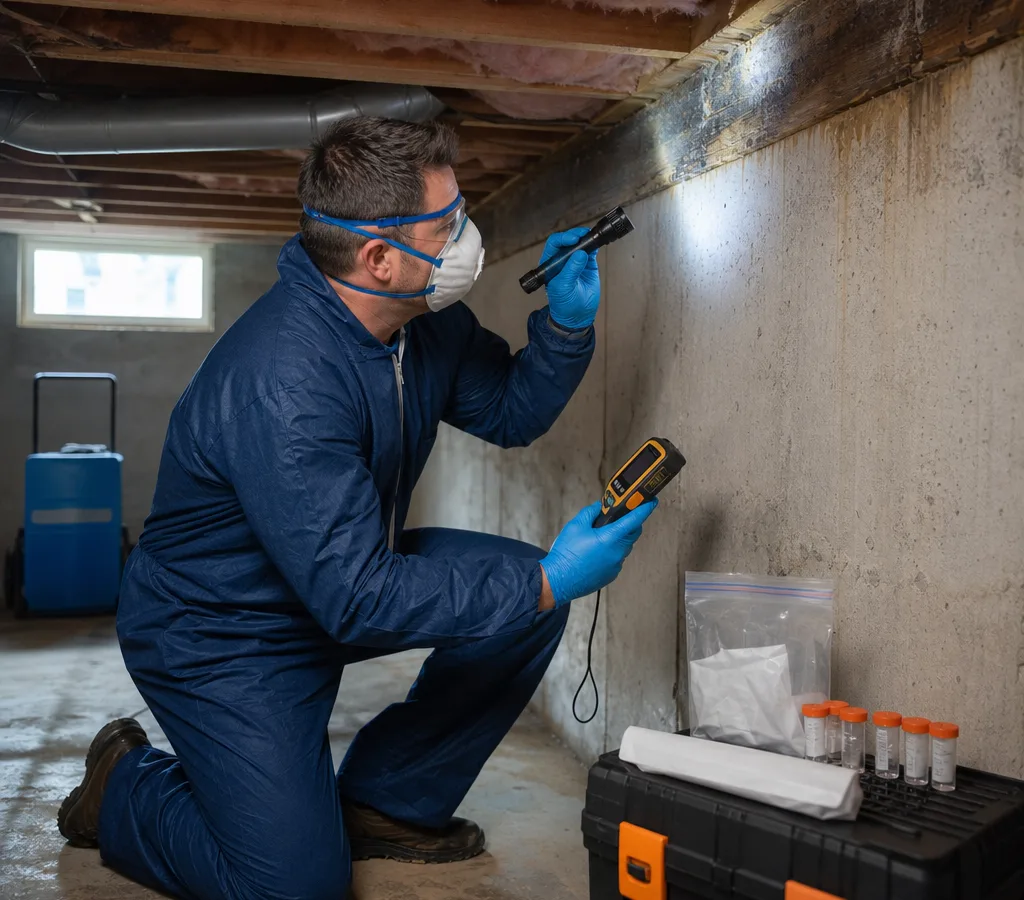
Musty odors often come from behind baseboards, finished wall systems, or stored items against exterior walls. Moisture mapping helps pinpoint damp framing or drywall without guessing.
Serving Indianapolis, Indiana & surrounding areas
Mon–Fri 8am–6pm · Sat 9am–2pm
Mold inspection · Indianapolis, Indiana
Get clear answers about suspected mold, moisture sources, and what to do next. We inspect, test when it makes sense, and document findings in plain language so you can make decisions with confidence.
A focused property assessment
An Indianapolis mold inspection is a focused assessment for visible and hidden fungal growth and, just as important, the moisture conditions that allow it to return. Most concerns in Indianapolis homes trace back to leaks, condensation, damp basements, wet building materials after a plumbing event, or chronic humidity in a poorly ventilated area.
A proper inspection typically includes:
What this inspection is not: a blanket guarantee that every microscopic spore in a building has been found. Mold is part of the natural environment. The goal is to identify active growth and the moisture issues driving elevated indoor conditions so you can correct the cause and stop recurrence.
If you already know cleanup is needed after confirmed growth, mold removal in Indianapolis is the next step after inspection and documentation.
Find what is feeding the problem
Many mold calls start with a spot on drywall or a musty odor. The spot is helpful, but it is rarely the whole story. The deciding factor is moisture: where it is, how long it has been present, and whether building materials are staying damp.
Indianapolis seasonal swings can push condensation into basement rim joists, exterior wall cavities, and uninsulated ducts. During inspection, we look for the conditions that keep feeding the issue:
Addressing the moisture source is what prevents the same issue from reappearing after cleaning or repairs.
Room-by-room evaluation
Inspection follows moisture pathways into the areas where growth can remain concealed behind finishes, cabinets, insulation, and mechanical equipment.
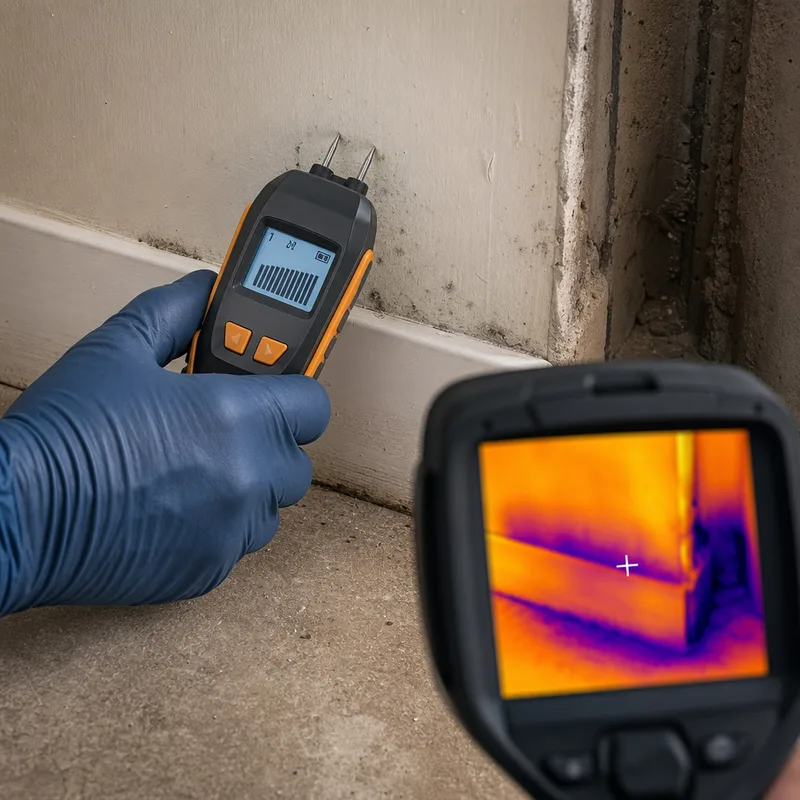
Musty odors often come from behind baseboards, finished wall systems, or stored items against exterior walls. Moisture mapping helps pinpoint damp framing or drywall without guessing.
Repeated humidity and small plumbing drips add up. We check around tubs, showers, toilets, vanities, washer hoses, and drains.
Poor ventilation or roof leaks can appear as discolored sheathing or damp insulation. We compare staining and moisture indicators with likely leak paths.
Slow leaks are common under sinks and around dishwashers. Cabinet bases can remain wet long after the visible floor appears dry.
Condensate drains, coils, humidifiers, and sweating ducts can contribute to microbial growth. We inspect accessible components and nearby materials.
Evidence before recommendations
We start with what you are seeing or smelling, recent leaks, and affected rooms so we can prioritize the areas most likely to reveal the source.
We inspect visible conditions and use meters to locate elevated moisture. If something looks suspicious behind a surface, we explain the options rather than making assumptions.
Air or surface sampling may help with clearance planning, real estate documentation, or uncertainty about what is present. If it will not change the next step, we tell you up front.
You receive a clear summary of what we found, where, and why it is happening, along with practical next actions for moisture correction, containment, or remediation.
On-site scope determines pricing
Most Indianapolis mold inspection visits typically range from about $250 to $600, depending on home size, how many areas are evaluated, and whether sampling is included. A basic visual inspection with moisture checks is usually at the lower end, while multi-area inspections with air or surface samples cost more.
Final pricing varies with access, the number of samples, and the complexity of the moisture investigation. The exact cost is confirmed when we understand the concerns and the on-site scope.
Indianapolis building conditions
A mold inspection often has to account for how local homes are built and how they handle moisture throughout the year.
Call Now 317-794-2941Older housing stock and retrofits: Parts of Broad Ripple and Irvington may combine original materials with later renovations, creating layered cavities where moisture can become trapped.
Basement-heavy construction: Finished basements can conceal moisture at perimeter walls, particularly where carpet or panel systems limit drying.
Tight newer builds: In parts of Fishers and Carmel, tighter envelopes make ventilation and humidity control important around supply boots, windows, and under-insulated wall sections.
Transitional seasons: Spring rains and fall temperature changes can reveal drainage, roof-leak, and condensation patterns. Readings reflect what the building is experiencing now.
If results need to support a transaction, documentation and sampling decisions can be tailored to real estate timelines while keeping moisture-source identification central.
Helpful answers before your visit
Not always. Testing is most useful when results will change a decision, such as real estate documentation, identifying a suspicious residue, or planning post-cleanup clearance. When visible growth and a clear moisture source are present, correcting the moisture problem and planning the proper scope are usually the priorities.
Most inspections take about 60 to 120 minutes on site, depending on home size, the number of areas involved, and access to attics, crawlspaces, or mechanical rooms. Sampling requires additional time for careful collection and labeling.
Yes. A musty odor without obvious staining is common, especially in basements, closets, and near HVAC equipment. We use a systematic walkthrough, moisture mapping, and targeted checks of common odor sources rather than random searching.
Leave suspected areas as-is and avoid scrubbing or spraying visible growth. If possible, clear access to cabinets, closets, basement corners, and attic or crawlspace entries so moisture readings and photos can be taken safely.
An inspection can identify likely moisture sources and affected materials, which drives the repair plan. Some repairs are straightforward, while others require follow-up from a plumber, roofer, or another specialist after the location is pinpointed.
Many situations can be managed safely, but risk depends on the amount of growth, its location, HVAC involvement, and household sensitivities. The inspection can clarify practical precautions, including limiting access until the moisture source is addressed and the area is properly cleaned.
Start with documented findings
Tell us what you are seeing—or smelling—and where it is happening. Mold Removal Indianapolis will schedule an Indianapolis inspection, document the findings, and outline next steps that fit your home and timeline.
For a full overview of our mold inspection work across the metro, see Mold Removal Indianapolis.